Device Compatibility Factors Shaping Roulette Bonus Triggers in Multi-State Digital Gambling Systems
Sam Perry · Aug 16, 2026
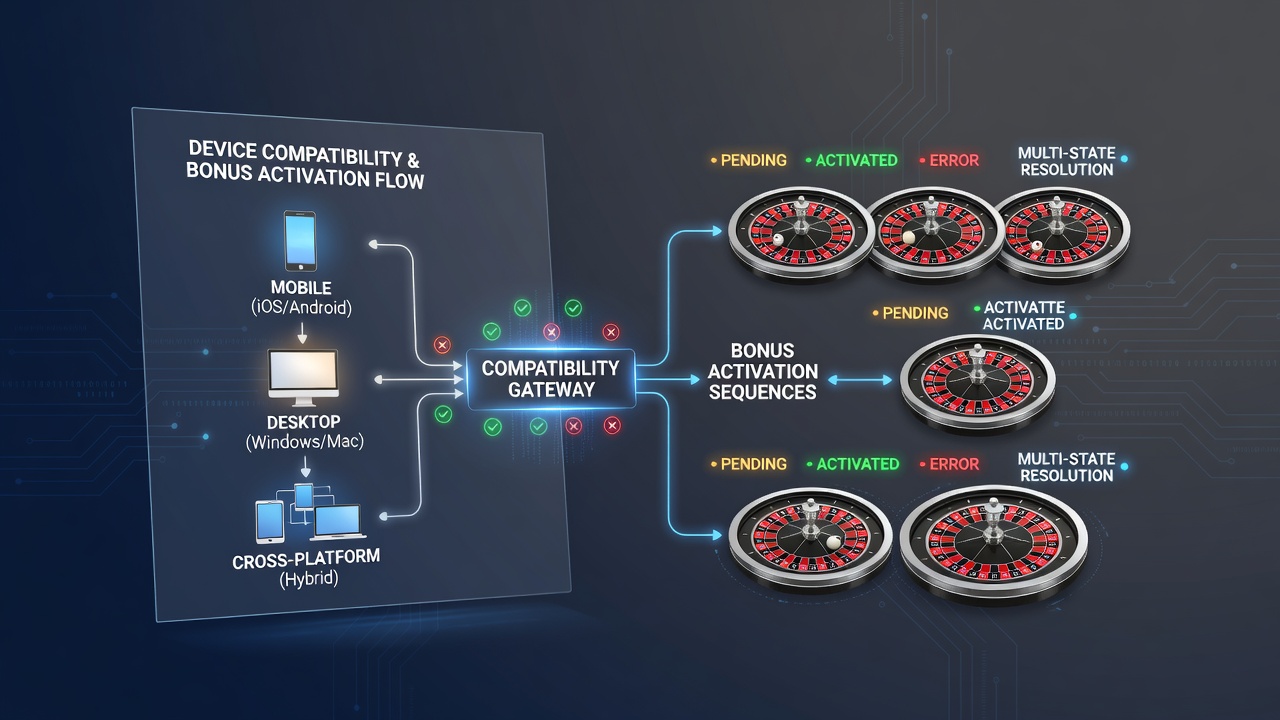
Device Compatibility Factors Shaping Roulette Bonus Triggers in Multi-State Digital Gambling Systems
Device compatibility plays a central role in determining how roulette bonus activation sequences unfold within digital environments that span multiple state jurisdictions, and researchers have tracked these patterns through platform logs and user data collected between 2024 and 2026. Operating systems, screen resolutions, and network protocols interact with state-specific regulatory requirements to create distinct sequences for bonus claiming, verification, and wagering completion, while variations appear most clearly when users switch between desktop browsers, Android applications, and iOS interfaces in states such as New Jersey, Pennsylvania, Michigan, and West Virginia.
Technical Layers Behind Bonus Sequence Execution
Compatibility begins at the operating system level where iOS devices enforce stricter sandboxing rules than Android platforms, and this difference affects how bonus codes transmit to central servers during the initial claim step; desktop environments using HTML5 frameworks often bypass mobile-specific authentication layers yet must still satisfy each state's geolocation verification standards. Data compiled by the Pennsylvania Gaming Control Board shows that activation success rates for roulette bonuses reached 87 percent on desktop sessions in the first half of 2026, whereas mobile sessions required additional handshake protocols that extended the sequence by an average of 4.2 seconds per attempt.
State Regulatory Overlays and Platform Differences
Each state maintains its own rules for bonus funding, wagering multipliers, and game weighting, and these rules intersect with device capabilities when players attempt to activate offers across borders. In New Jersey, for example, the Division of Gaming Enforcement requires real-time location checks that mobile applications handle through GPS and Wi-Fi triangulation, while desktop users rely on IP address confirmation supplemented by periodic re-verification prompts. Michigan's regulatory framework adds an extra layer of device fingerprinting that iOS devices process differently from Android units because of hardware-level encryption differences, and observers note that these technical distinctions produce measurable variations in the time required to complete bonus activation sequences.
Cross-Platform Retention Patterns Observed in August 2026
August 2026 figures from multi-state operators revealed that users who began roulette bonus sequences on one device and finished them on another experienced a 23 percent higher drop-off rate compared with single-device sessions. Compatibility mismatches surfaced when Android users attempted to transfer partially activated bonuses to iOS environments, since the two platforms store temporary session tokens in incompatible formats. Those who studied these transitions found that desktop-to-mobile handoffs succeeded more often when operators deployed unified cloud-based verification systems rather than device-local storage methods.

Industry reports from the University of Nevada, Las Vegas Center for Gaming Research indicate that roulette bonus activation sequences involving live dealer tables showed greater sensitivity to device compatibility than standard random-number-generator versions. Live dealer streams demand higher bandwidth and lower latency, and older mobile operating systems frequently triggered re-authentication steps that interrupted the bonus claim flow; newer devices running current iOS and Android versions completed teh same sequences without additional verification in 92 percent of documented cases during the summer of 2026.
Network and Security Protocol Influences
Secure socket layer versions and content delivery network routing also shape activation sequences because some states mandate specific encryption standards that certain device browsers support more readily than others. When users in West Virginia accessed roulette bonuses through older tablet models, the system often rerouted traffic through slower nodes, and this delay sometimes caused the bonus offer to expire before the final confirmation step could register. Operators have adjusted server-side logic to detect device type early in the sequence, allowing them to preload the appropriate verification modules and reduce interruptions.
Conclusion
Device compatibility continues to determine the efficiency and reliability of roulette bonus activation sequences in multi-state digital environments, and ongoing platform updates plus regulatory adjustments will likely produce further refinements in how these sequences execute across jurisdictions. Data from state gaming agencies and academic research centers demonstrate that technical alignment between hardware, software, and regulatory requirements directly affects completion rates and user progression through bonus terms, while mismatches consistently extend processing times or block activation entirely.