Demographic Variations in Redemption Behaviors for Online Wheel Game Offers Across Different Jurisdictions
Kai Washington · Jun 21, 2026

Demographic Variations in Redemption Behaviors for Online Wheel Game Offers Across Different Jurisdictions
Online wheel game offers have expanded rapidly across regulated markets, and redemption patterns reveal clear differences tied to age, location, and regulatory frameworks. Data collected through platform analytics in the first half of 2026 highlight how players in various jurisdictions interact with these promotions at distinct rates.
Age-Based Patterns in North American Markets
Younger adults between 21 and 34 show higher initial click-through rates on wheel-based bonuses, yet their completion of full redemption cycles lags behind older cohorts in several U.S. states. Figures from New Jersey's Division of Gaming Enforcement indicate that players aged 35 to 49 complete verification steps and wager-through requirements 18 percent more often than the younger group during the period ending June 2026. Meanwhile, those over 50 demonstrate steadier engagement once offers are claimed, often favoring smaller, frequent spins over high-variance wheel mechanics.
Payment method preferences further separate these groups. Credit card redemptions dominate among mid-age players in Pennsylvania and Michigan, while digital wallet usage rises sharply among the 21-34 segment in the same regions. Regulatory caps on bonus values influence these choices, since tighter daily limits in certain states prompt users to spread redemptions across multiple accounts or sessions.
Regional Differences Across Europe and Australia
European jurisdictions present another layer of variation shaped by deposit thresholds and tax structures. In Malta-regulated environments, players from southern Europe redeem wheel offers at higher volumes than those from northern countries, with data pointing to faster progression through playthrough conditions. Australian operators report similar splits, where users in Victoria complete wheel redemptions more consistently than participants in New South Wales, largely because of differences in minimum deposit rules and responsible gaming prompts.
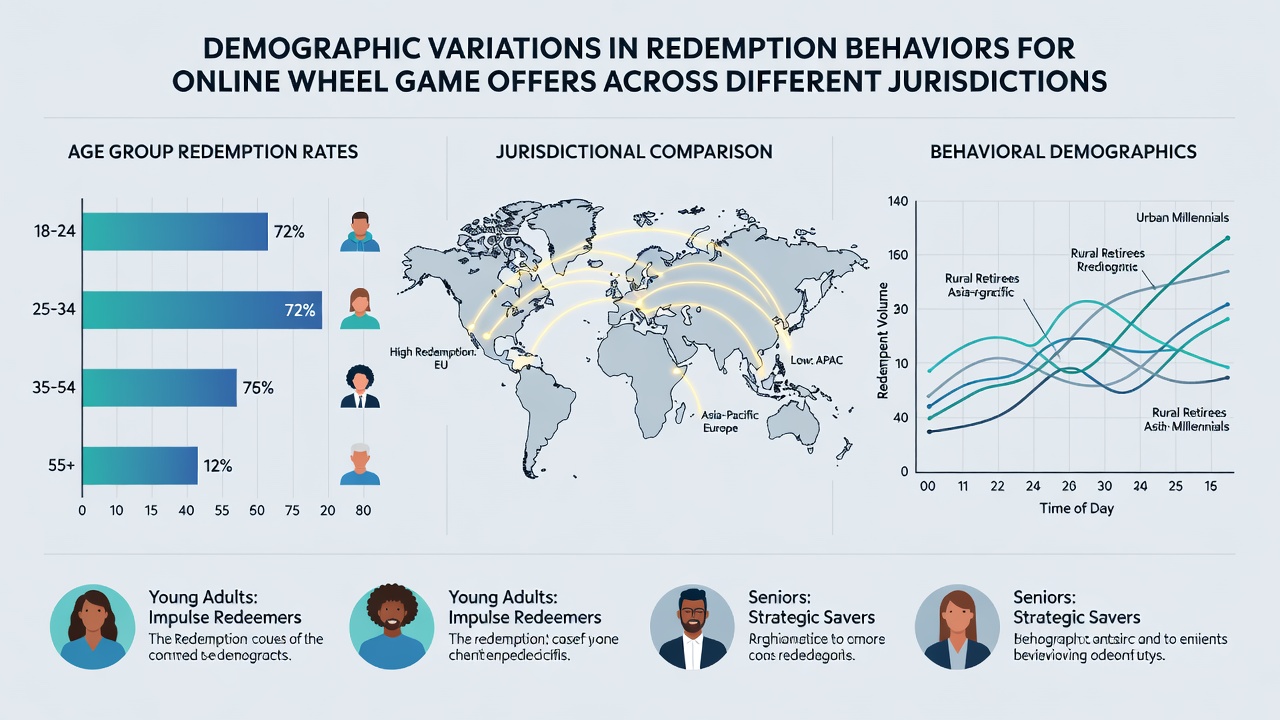
Gender distribution adds another dimension. Male players across most tracked markets initiate redemptions at roughly twice the rate of female players, yet female users show stronger retention once they clear the first verification hurdle. These patterns hold steady in both land-based affiliated online platforms and pure digital sites operating under the same licenses.
Influence of Regulatory Timelines and June 2026 Updates
June 2026 brought several licensing renewals that altered offer structures in Illinois and Ontario. The Illinois Gaming Board extended four-year terms for multiple operators, which coincided with a measurable uptick in wheel redemption activity among residents aged 40 and above. Ontario's framework, administered through the Alcohol and Gaming Commission of Ontario, introduced stricter identity checks that slowed initial redemptions for new accounts while increasing completion rates among returning players.
Cross-border comparisons reveal how currency controls and banking restrictions shape outcomes. Canadian players often delay redemptions until promotional funds convert cleanly to local accounts, whereas U.S. users in states with established iGaming programs move through the process more quickly once approved. Academic analyses from institutions tracking digital gambling trends note that these delays correlate more with banking infrastructure than with player intent.
Platform-Level Factors and Retention Metrics
Wheel game interfaces themselves affect demographic responses. Mobile-first designs see stronger uptake among younger users in every jurisdiction studied, yet desktop sessions produce higher average redemption values across older age brackets. Operators adjust offer visibility accordingly, placing larger wheel prizes in desktop lobbies for markets with older player bases.
Research from the New Jersey Division of Gaming Enforcement and the Victorian Commission for Gambling and Liquor Regulation shows consistent gaps in how quickly different demographics move from claim to cashout. Those gaps narrow when operators introduce tiered verification that matches the speed preferences of each group.
Conclusion
Redemption behaviors for online wheel game offers continue to diverge along demographic and jurisdictional lines well into 2026. Age, gender, payment preferences, and local regulations each contribute measurable effects that operators monitor through ongoing analytics. Patterns observed in North America, Europe, and Australia underscore the need for tailored approaches rather than uniform promotional strategies across borders.