Decoding Seasonal Incentive Cycles for Table Game Enthusiasts in Virtual Casino Environments
Eden Simon · Jun 25, 2026
Decoding Seasonal Incentive Cycles for Table Game Enthusiasts in Virtual Casino Environments
Virtual casino platforms adjust incentive structures throughout the year to align with player activity patterns and calendar events, creating distinct cycles that affect table game enthusiasts in measurable ways. These adjustments appear in bonus offerings, wager requirements, and reward tiers tied to games like roulette, blackjack, and baccarat, with operators tracking engagement data to refine timing and value. Observers note that such cycles often correlate with holidays, weather shifts, and regional events, producing predictable spikes in participation during certain months while other periods show steadier but lower activity levels.
Mapping Annual Incentive Patterns Across Platforms
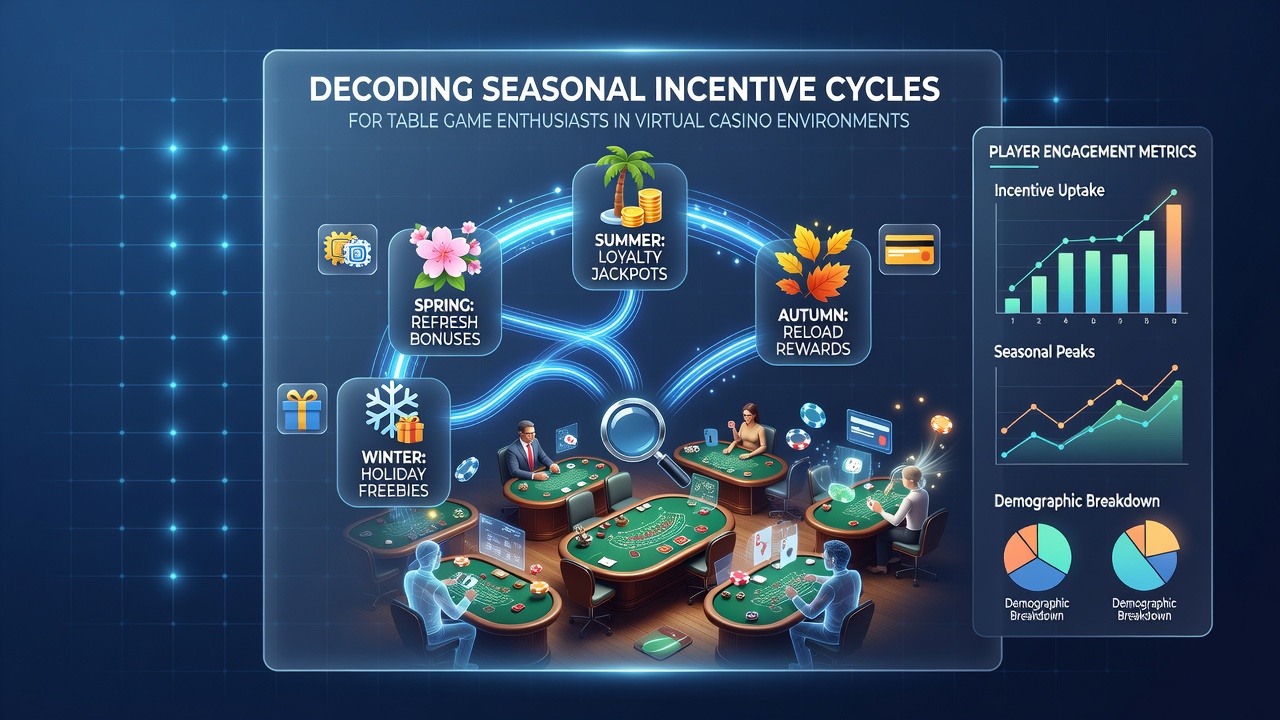
Research from multiple digital gaming operators indicates that winter months typically feature expanded deposit match offers and cashback programs designed around holiday schedules, with table game sections receiving targeted promotions that extend play sessions on live dealer variants. Data collected through 2025 and into early 2026 reveals that December promotions frequently include reduced rollover thresholds for roulette and blackjack wagers, allowing players to unlock rewards faster during peak family gathering periods. Platforms report higher cross-session retention when these incentives combine with themed events that run from late November through January, producing measurable lifts in average wager volumes per user.
Spring cycles shift focus toward renewal-themed bonuses that coincide with tax refund distributions in several jurisdictions, where operators introduce no-deposit credits or free spin packages applicable to table games. These offers often carry shorter validity windows to encourage immediate engagement, and analytics from licensed environments show increased mobile participation rates as users transition from desktop to portable devices during commuting hours. The pattern holds across North American and European markets, with variations in promotional depth tied to local regulatory calendars.
Summer Adjustments and Regional Influences
By June 2026, virtual casino environments had already begun rolling out summer incentive layers that respond to travel patterns and outdoor activity surges, often reducing table game bonus values while introducing loyalty multipliers that reward consistent weekly play. Operators in warmer climates extend these programs through August, incorporating elements like progressive jackpot boosts for baccarat and poker tables that activate during evening hours when participation dips. Figures from regional oversight bodies demonstrate that these adjustments maintain steady revenue streams even as overall session lengths shorten due to seasonal lifestyle changes.

Platforms serving international audiences further adapt summer cycles to account for differing vacation schedules across hemispheres, resulting in staggered promotion launches that avoid direct overlap. Australian and Canadian operators, for instance, have documented success with mid-year reload bonuses that target returning users after extended breaks, and these structures often integrate with loyalty programs to sustain engagement through September. The approach relies on behavioral data that tracks login frequency and game selection, allowing for precise calibration of incentive values.
Fall Transitions and Retention Dynamics
Autumn periods mark another distinct phase where incentives pivot toward back-to-routine promotions that emphasize deposit bonuses and tournament entries for table game players. Data compiled by industry tracking services shows elevated redemption rates for these offers between September and November, particularly when bundled with milestone rewards that unlock after a set number of qualifying wagers. Such structures help stabilize player bases ahead of the winter cycle, with operators noting stronger cross-game migration when roulette enthusiasts receive incentives that also apply to blackjack variants.
Those who study user behavior across licensed virtual environments find that fall cycles frequently incorporate educational components, such as strategy guides paired with bonus credits, which correlate with longer-term retention improvements. Regulatory reports from bodies like the New Jersey Division of Gaming Enforcement highlight how these timed releases align with fiscal reporting periods, producing transparent metrics on promotional effectiveness.
Evaluating Cross-Platform Effects on Table Games
Comparative analysis across multiple virtual casino networks reveals that incentive cycles exert stronger influence on live dealer table games than on slot offerings during transitional months, as players respond to wager-based rewards that directly impact blackjack and roulette outcomes. Studies from academic research groups indicate that platforms offering consistent seasonal structures across desktop and mobile interfaces achieve higher retention metrics, especially when promotions account for device-specific play patterns. This holds true in markets where operators coordinate with payment processors to streamline bonus activation during high-traffic seasonal windows.
Evidence gathered through 2026 further suggests that overlapping regional events, such as major sporting calendars or cultural festivals, can amplify or dampen the effects of standard seasonal incentives on table game sections. Operators adjust accordingly by modulating bonus caps and eligibility criteria to maintain balance, drawing on aggregated user data that spans multiple jurisdictions without violating privacy standards.
Conclusion
Seasonal incentive cycles in virtual casino environments follow observable patterns driven by calendar events, player availability, and regulatory frameworks, with table game enthusiasts experiencing targeted adjustments that influence engagement timing and reward access. Platforms continue to refine these structures using performance data from prior cycles, resulting in increasingly precise alignments between promotional value and user behavior across regions. The ongoing evolution of these cycles reflects broader industry responses to measurable activity trends rather than static offerings.