Charting Demographic Shifts in Roulette Reward Redemption Across Emerging State Markets
Eden Simon · Jun 7, 2026
Charting Demographic Shifts in Roulette Reward Redemption Across Emerging State Markets
Emerging state markets have shown measurable changes in how different population segments approach roulette reward redemption, with data from regulatory filings and operator reports highlighting patterns tied to age, income levels, and geographic access points. Observers note that states which expanded legal gaming frameworks after 2023 continue to generate detailed metrics on player engagement, particularly around loyalty programs and bonus structures tied to wheel-based games. These shifts reflect broader adoption curves where new participants enter the ecosystem at varying rates depending on local legislation and digital infrastructure availability.
Tracking Participation in New Regulatory Environments
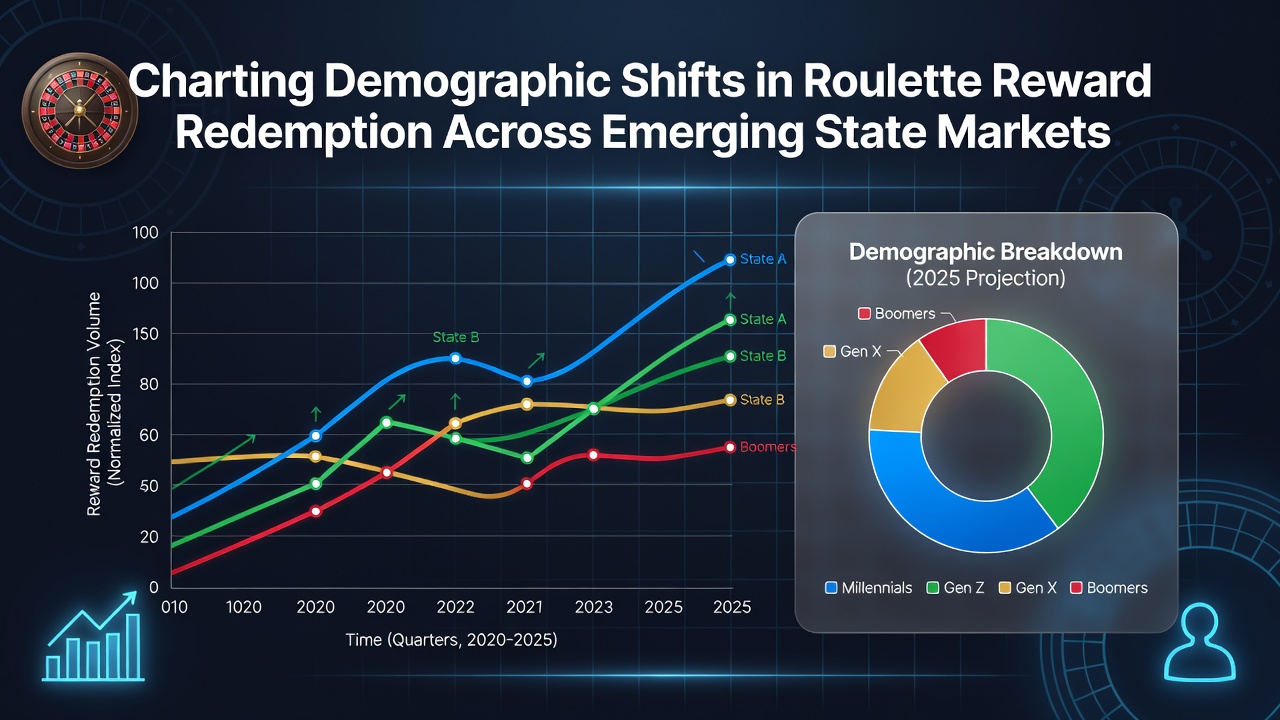
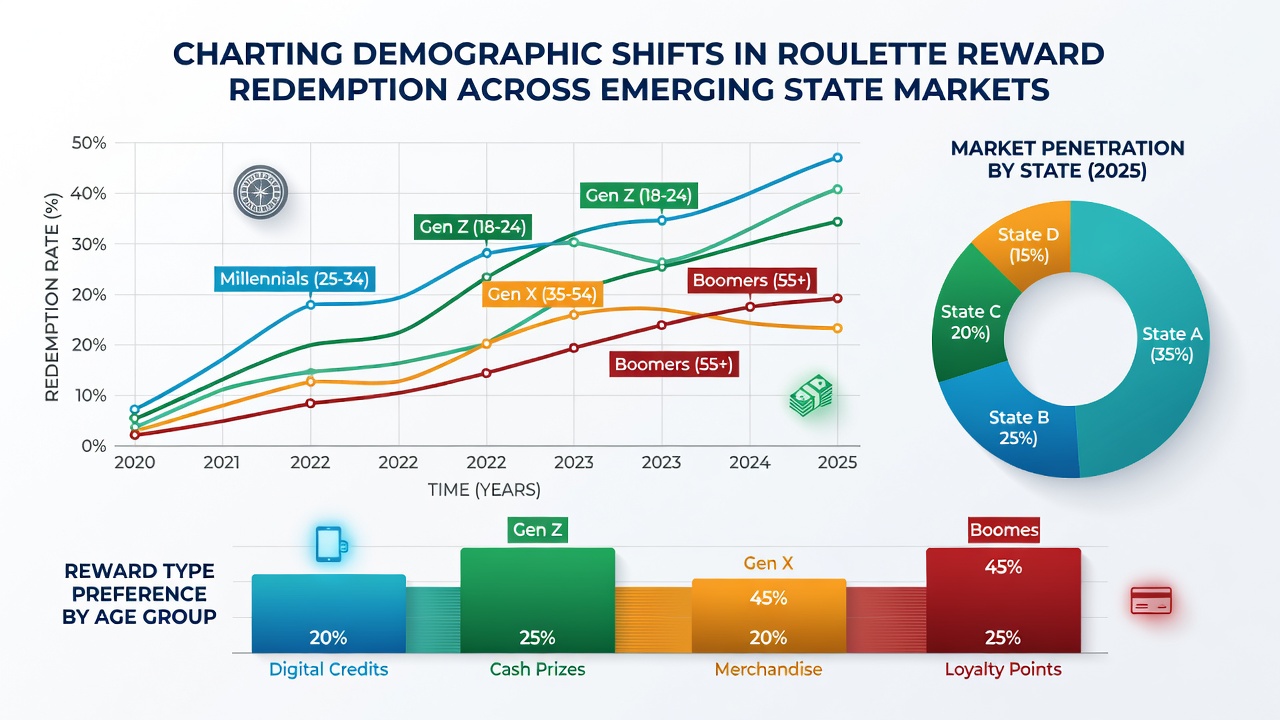
States such as Ohio and Michigan have released aggregated redemption statistics through their respective gaming oversight bodies, revealing that players aged 25 to 34 account for an increasing share of digital roulette reward claims compared to earlier launch periods. Data compiled through June 2026 indicates this cohort often utilizes mobile platforms for initial redemptions, while older demographics maintain higher in-person activity at retail locations. Researchers at university-affiliated gaming studies programs have documented similar trends by cross-referencing transaction logs with census-derived population profiles, showing that household income brackets above $75,000 demonstrate faster uptake of tiered loyalty rewards in these jurisdictions.
Regional Variations and Access Patterns
Geographic factors influence redemption velocity, with urban counties in recently legalized markets posting higher per-capita activity than rural zones during the first 18 months of operation. The Michigan Gaming Control Board published quarterly summaries that break down roulette-specific promotions by ZIP code clusters, illustrating how proximity to newly licensed facilities correlates with repeat reward usage among working-age adults. Meanwhile, reports from the American Gaming Association track how interstate compacts and online platform approvals alter these distributions, allowing residents in border regions to access cross-state redemption options that were unavailable prior to regulatory updates. One analysis of transaction timestamps found that evening hours between 8 p.m. and midnight capture the largest volume of digital claims across multiple emerging markets, regardless of demographic slice.
Age and Gender Distribution in Reward Utilization
Breakdowns released by operators licensed in Ohio show that female participants have increased their share of roulette reward redemptions by roughly 12 percent year-over-year through the first half of 2026, with notable concentration in the 35 to 44 age range. These figures come from anonymized player databases that separate engagement by game type and promotion category. Male players in the same markets continue to represent the majority of high-volume redemptions, yet the gap narrows when examining lower-tier loyalty tiers that require fewer accumulated points. Academic papers from institutions examining gambling behavior have noted parallel movements in other jurisdictions, where expanded legal access draws previously untapped segments into structured reward systems. Those who monitor these datasets point out that education levels also appear as a secondary variable, with college-educated cohorts showing elevated response rates to time-limited roulette offers promoted through app notifications.
Income and Platform Preferences
Income stratification emerges clearly in redemption channel choices, where lower-to-middle income groups favor instant digital payouts while higher earners more frequently convert rewards into physical experiences such as tournament entries or merchandise. Figures from state-mandated compliance reports indicate that mobile app redemptions now exceed 60 percent of total roulette-related claims in markets that legalized online components after 2024. This platform shift aligns with broader device ownership patterns documented by federal communications data, which track smartphone penetration across income and age brackets. Observers tracking these movements note that operators adjust reward structures accordingly, introducing shorter expiration windows on digital bonuses to match the faster transaction cycles observed among younger users.
June 2026 Snapshot and Ongoing Monitoring
By June 2026, cumulative datasets from multiple state commissions illustrate continued evolution rather than stabilization, with new entrants from previously non-gaming households contributing measurable volume to lower-stakes roulette promotions. The National Council on Problem Gambling has referenced these demographic expansions in its periodic reviews, emphasizing the value of granular tracking to inform responsible gaming parameters. Cross-state comparisons reveal that markets with earlier online integration, such as those following New Jersey's model, display more mature demographic spreads than states still in initial rollout phases. Industry research groups compile these disparate sources into unified dashboards that highlight retention differences by cohort, showing that reward redemption frequency often predicts longer-term platform loyalty across age groups.
Conclusion
Demographic mapping of roulette reward activity in emerging state markets continues to evolve as regulatory environments mature and participant pools diversify. State-level data releases combined with academic and industry analyses provide the factual foundation for understanding these patterns without speculation on future trajectories. Continued collection of anonymized metrics through established oversight channels will supply further clarity on how different population segments interact with available reward mechanisms over successive reporting periods.